
Summary (Internalized Family Dynamics Roles In Adults)
Internalized family dynamics roles in adults are subconscious behavioral blueprints developed in childhood to maintain stability within a dysfunctional or stressed family system. Common roles include the Hero (overachiever), the Scapegoat (the “problem” child), and the Lost Child (the invisible one). While these roles served as survival mechanisms early in life, they often manifest in adulthood as chronic burnout, intimacy issues, or self-sabotage. Recognizing that these behaviors are learned scripts—not your actual identity—is the first step toward reclaiming your authentic self and establishing healthy boundaries in your current relationships and career.
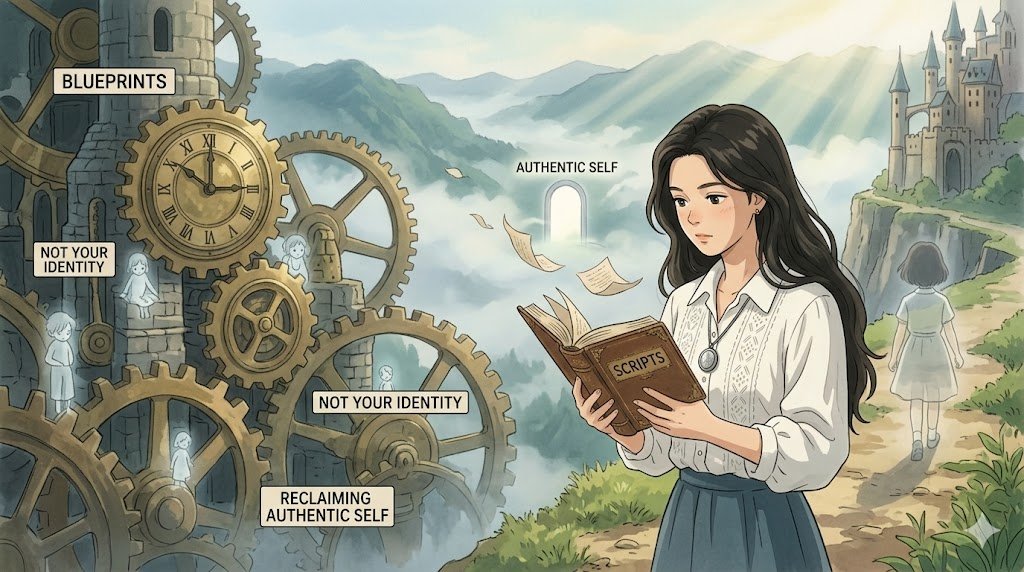
The Meeting Before the Meeting
You’re twenty-six years old. You have a mortgage, a decent 401(k), and a job title that sounds impressive at cocktail parties. Yet, as you sit in the Tuesday morning strategy meeting, your palms are sweating. Your boss asks for feedback on a flawed project, and suddenly, you aren’t a senior manager anymore.
You are eight years old again, standing in a kitchen where the air is thick with your father’s unspoken rage and your mother’s frantic cleaning.
In that moment, you have a choice: Speak up and risk being “the problem,” or swallow your words and keep the peace. You choose the latter. You’ve always chosen the latter. You are the “Hero,” the one who keeps the ship from sinking by sacrificing their own voice. Or perhaps you’re the “Lost Child,” so good at being invisible that you’ve become a ghost in your own life.
This is the haunting reality of internalized family dynamics roles in adults.
We like to think we leave our childhoods behind when we pack up our childhood bedrooms and move into our first apartments. We believe that by changing the scenery, we change the play. But the psyche doesn’t work that way. We don’t just leave our families; we carry the entire “Family System” inside us like a piece of software running in the background, quietly draining our battery and dictating how we interact with the world.
These roles weren’t choices. They were life vests. You put them on because the water was choppy and you didn’t want to drown. The tragedy isn’t that you wore the vest; it’s that you’re still wearing it twenty years later in a swimming pool where your feet can easily touch the bottom.
In Humanity Deboism, we don’t look at these roles as “disorders.” We look at them as outdated survival strategies. It’s time to stop being the character and start being the author.
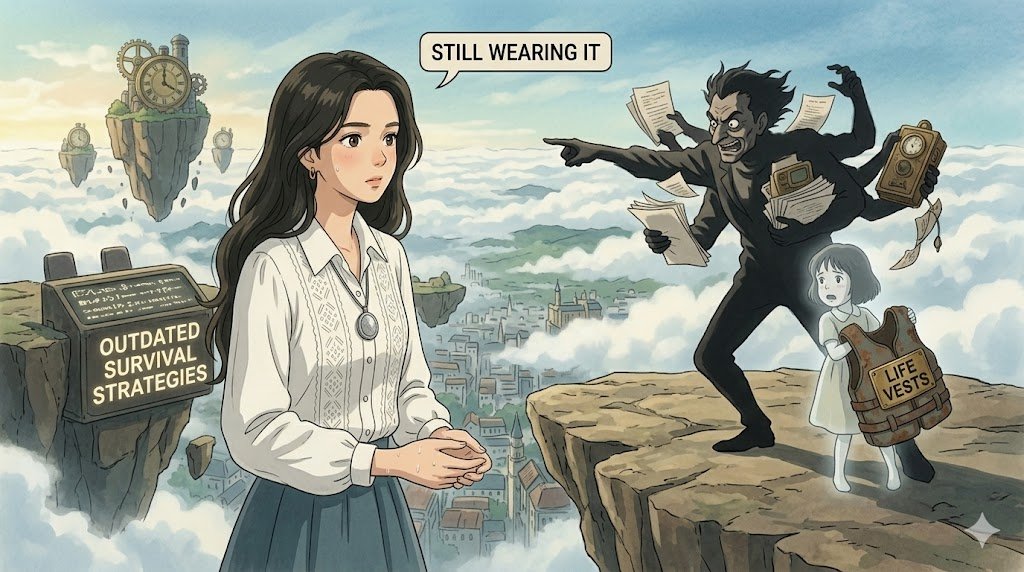
1. The Invisible Script—How Childhood Survival Became Adult Sabotage
To understand why you keep dating people who need “fixing” or why you can’t accept a compliment without waiting for the other shoe to drop, we have to look at Family Systems Theory.
A family isn’t just a group of individuals; it is an emotional unit. When that unit is under pressure—due to addiction, mental illness, or generational trauma—it seeks equilibrium. It needs to stay balanced, even if that balance is toxic. To achieve this, every member is assigned a “job” to keep the system functioning.
The Architecture of the Internalized Role
When these roles are internalized, they stop being something you do and start being who you are. This is where the friction begins in adulthood.
- The Hero (The Over-Functioner): Your job was to provide the family with a sense of worth. If you were perfect, the family looked “good” from the outside. In adulthood, this manifests as a workaholic who cannot rest because their self-worth is tied entirely to their last win.
- The Scapegoat (The Truth-Teller): You were the “identified patient.” By acting out, you drew attention away from the real issues (like a parent’s drinking). Now, you find yourself constantly in conflict with authority, subconsciously proving that you are, indeed, the “bad” one.
- The Lost Child (The Invisible One): You survived by requiring nothing. You stayed in your room, made no noise, and asked for no help. As an adult, you struggle with intimacy and “finding your place” because you’ve spent a lifetime perfecting the art of not existing.
The problem is that the “World” isn’t your “Family.” Your boss isn’t your father. Your partner isn’t your mother. When you apply these childhood roles to adult environments, they become self-sabotage. You are playing a game with rules that no longer apply, on a field that has completely changed.
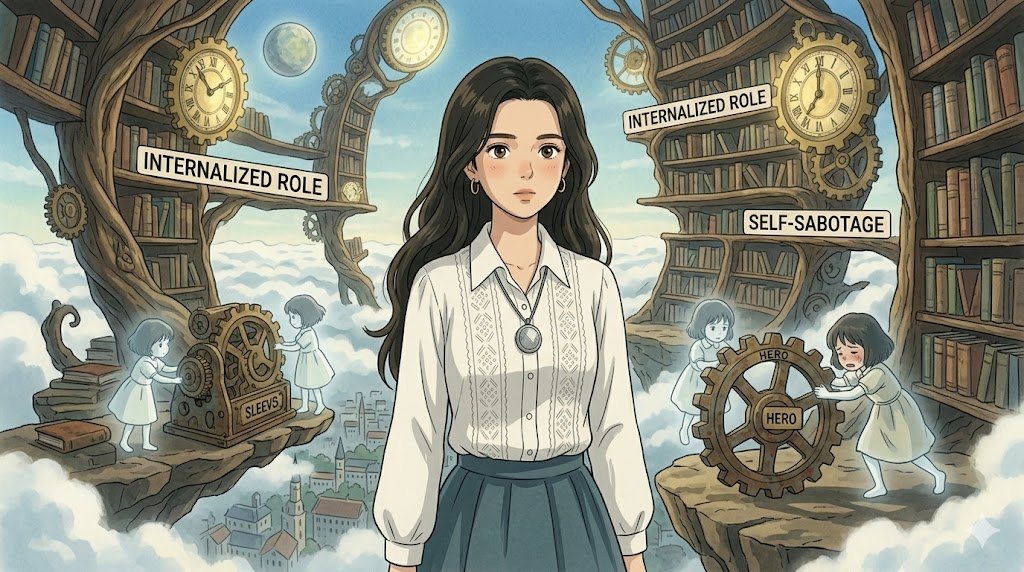
2. The Modern Masquerade—How Roles Morph in Adulthood
We don’t outgrow our family roles; we just get better costumes. The “Hero” doesn’t stay the straight-A student forever; they become the Vice President who answers emails at 2:00 AM because they secretly believe that if they stop producing, the entire company—and perhaps their own sense of self—will vanish. The “Scapegoat” doesn’t always stay the kid getting detention; they become the “disruptive” creative who can’t hold a job because they perceive every piece of constructive criticism as a personal attack, a replay of the “you’re the problem” loop.
These roles are essentially internalized family dynamics roles in adults that act as a filter for reality.
The Hero: The High-Functioning Burnout
In the family, you were the trophy. In adulthood, you are the engine. You struggle with boundaries because, to you, a boundary feels like a failure. You take on the emotional labor of your entire friend group. You are “the reliable one,” a title that has become a cage. The logic is simple but exhausting: If I am perfect, I am safe.
The Scapegoat: The Self-Sabotaging Truth-Teller
You have a “BS detector” that is second to none. You see the cracks in the system before anyone else. But because you were conditioned to be the repository for the family’s shame, you often blow up your own life right when things are going well. You feel like an impostor in stable environments because “stable” feels foreign. You are used to the heat of the fire.
The Lost Child: The Invisible Professional
You are the master of the “Irish Goodbye.” In meetings, you have brilliant ideas you never voice. In relationships, you are easy-going to a fault, often waking up ten years into a marriage wondering who the person in the mirror is. Your survival depended on not having needs, so now, you don’t even know how to identify them.
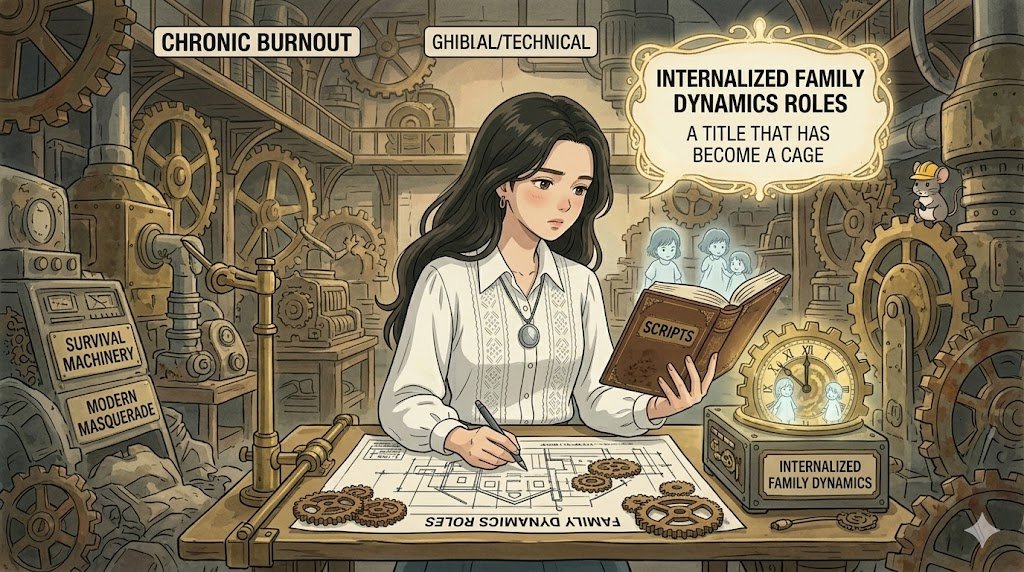
3. The Neurological Anchor—Why “Knowing” Isn’t Enough
Most therapy stops at the “Aha!” moment. You realize you were the Scapegoat, you cry for a bit, and then you go right back to picking a fight with your partner. Why? Because your nervous system is addicted to the “familiar.”
To your brain, familiarity equals safety, even if that familiarity is painful. If you grew up in a house where you only received attention when you were in trouble, your brain perceives a quiet, loving relationship as a threat. It’s too quiet. Something must be wrong. So, you create a problem to return to the “baseline” of conflict. This is the “internalized” part of the dynamic—it’s no longer coming from your parents; it’s coming from your own amygdala.
Debo’s Field Notes: The Mirror Check
“You aren’t broken; you’re just incredibly well-adapted to a world that no longer exists. The person you became to survive your childhood is now the person preventing you from living your adulthood. Thank that version of yourself—they saved you—and then politely ask them to step out of the driver’s seat.”
The Reality Check: Why This Fails
The “Self-Help” Trap. Most people read a list of roles, identify as a “Hero,” and think the work is done. It isn’t. In fact, identifying as a “Hero” can often be another way to over-achieve at healing. You’ll buy ten books, join three workshops, and try to “win” at therapy.
The reality is that shedding these roles is messy, non-linear, and incredibly lonely. When you stop being the “Hero,” the people around you—who have benefited from your over-functioning—will get angry. They will try to pull you back into your box. They will call you “selfish” or “changed.”
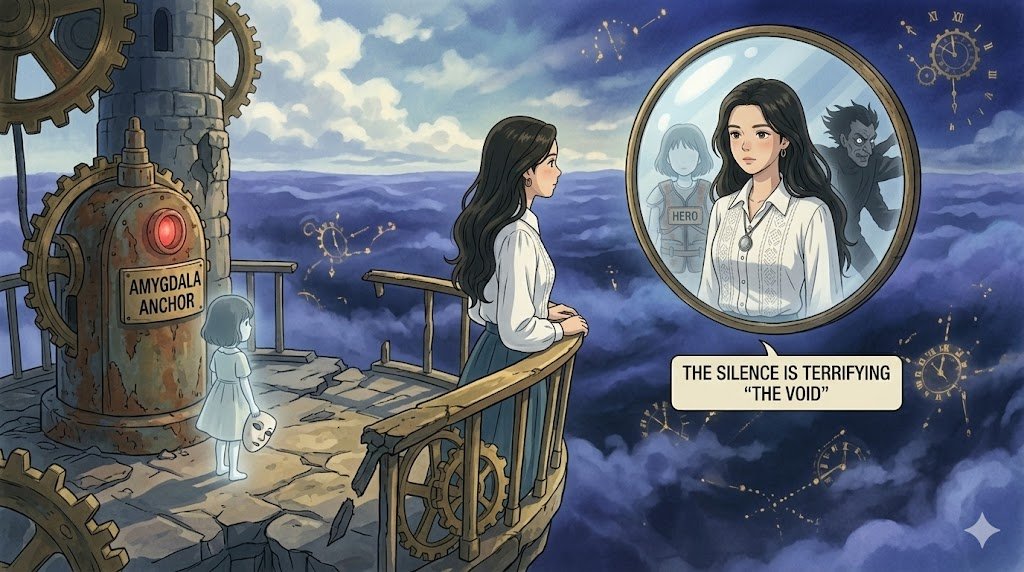
True growth involves a period of “The Void,” where you aren’t the old role anymore, but you don’t know who the “new” you is yet. Most people quit here because the silence is terrifying. Logic won’t get you through the void; only a tolerance for discomfort will.
The Roles vs. The Reality: A Comparison
| Family Role | Adult Internalization | The Subconscious “Script” | The Career Impact |
| The Hero | The Over-Functioner | “I must be perfect to be loved.” | Burnout, unable to delegate, micromanagement. |
| The Scapegoat | The Rebel/Outcast | “It’s always my fault anyway.” | Conflict with authority, self-sabotage, high creativity. |
| The Lost Child | The Ghost | “If I don’t have needs, I won’t be hurt.” | Overlooked for promotions, isolation, lack of agency. |
| The Mascot | The Deflector | “If they’re laughing, they can’t see me.” | Using humor to avoid depth, “Class Clown” in the office. |
The Logic of the System
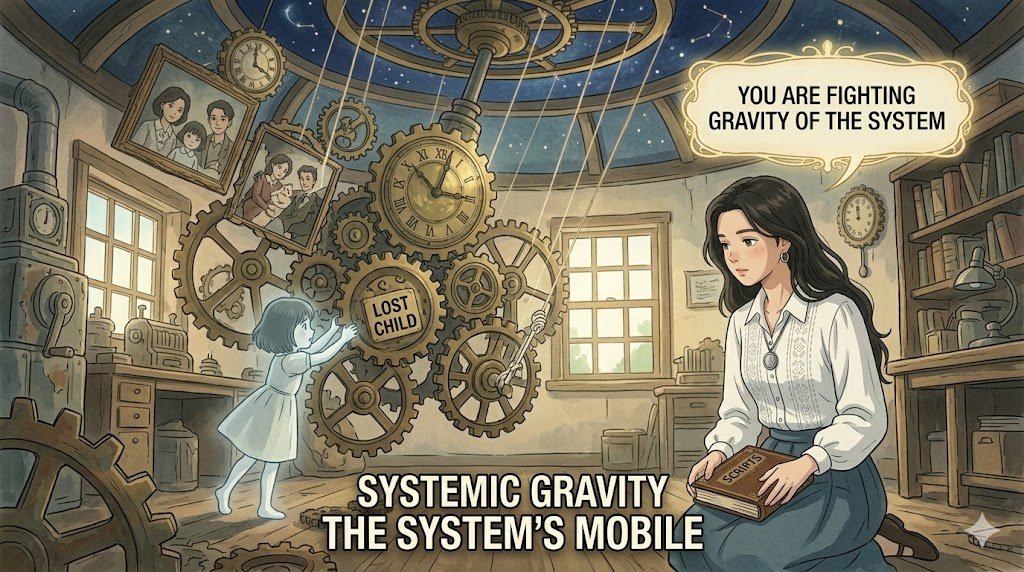
The family operates like a mobile hanging from a ceiling. If you pull on one string (the Scapegoat leaves or heals), the whole mobile tilts. The system will do everything in its power to pull that string back into place to regain balance. Understanding internalized family dynamics roles in adults requires realizing that you aren’t just fighting your own habits; you are fighting the gravity of an entire system that wants you to stay exactly who you used to be.
Debo’s Field Notes: On “Information Gain”
“Most people talk about ‘healing’ as if it’s an addition—adding new skills. It’s actually a subtraction. It’s about stripping away the layers of the ‘Hero’ or ‘Lost Child’ until the raw, unedited human underneath is all that’s left. That person is usually much weirder, quieter, and more interesting than the role you’ve been playing.”
4. The “Shadow Role” and the Myth of the Static Identity
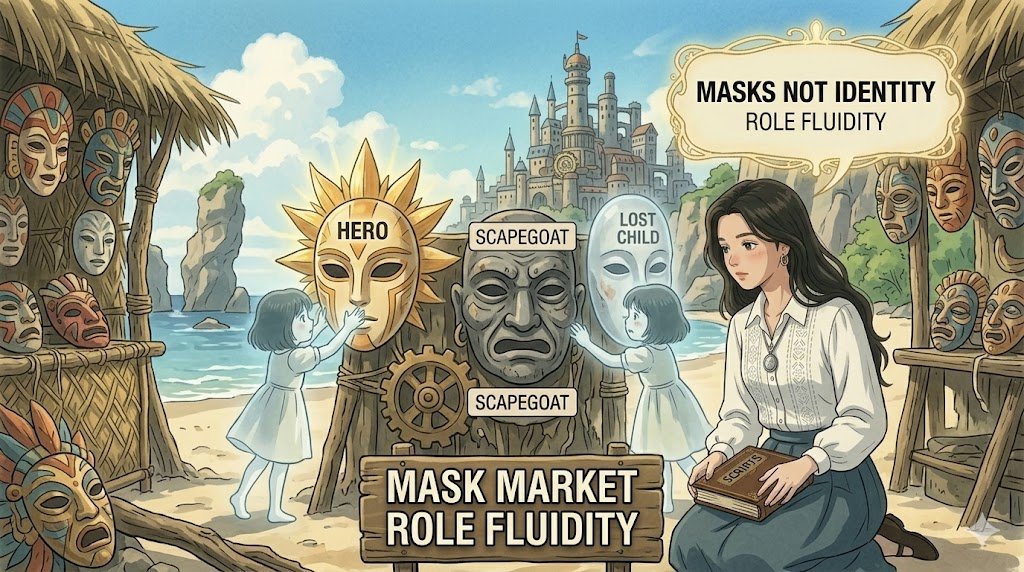
Standard psychology loves to put you in a box. You are “The Scapegoat.” You are “The Hero.” But the Humanity Deboism perspective recognizes that these aren’t concrete identities—they are fluid, adaptive masks. Most of us don’t play just one role; we have a primary role and a “Shadow Role” that comes out when our primary strategy fails.
The “Hero,” when pushed to the point of a nervous breakdown, doesn’t just rest. They often flip into the “Lost Child,” checking out entirely, ghosting their responsibilities, and numbing out with substances or endless scrolling. This isn’t a new personality; it’s a secondary survival circuit.
We call this Role Fluidity. You might be the “Hero” at the office—the one who saves every project—but the “Scapegoat” at Thanksgiving dinner, where you’re still treated like the family screw-up despite your six-figure salary.
The “Information Gain” here is simple: You are not your role. You are the actor who has been playing the part so long you’ve forgotten there’s a person under the costume. If you can be a Hero in one room and a Scapegoat in another, it proves the role is external to your soul. It’s a coat you put on because the room was cold. Understanding this fluidity is the key to realization. It breaks the “static label” trap and allows you to ask: Who am I when I’m not being useful, problematic, or invisible?
5. The Alchemy of the Role—Turning Lead into Gold
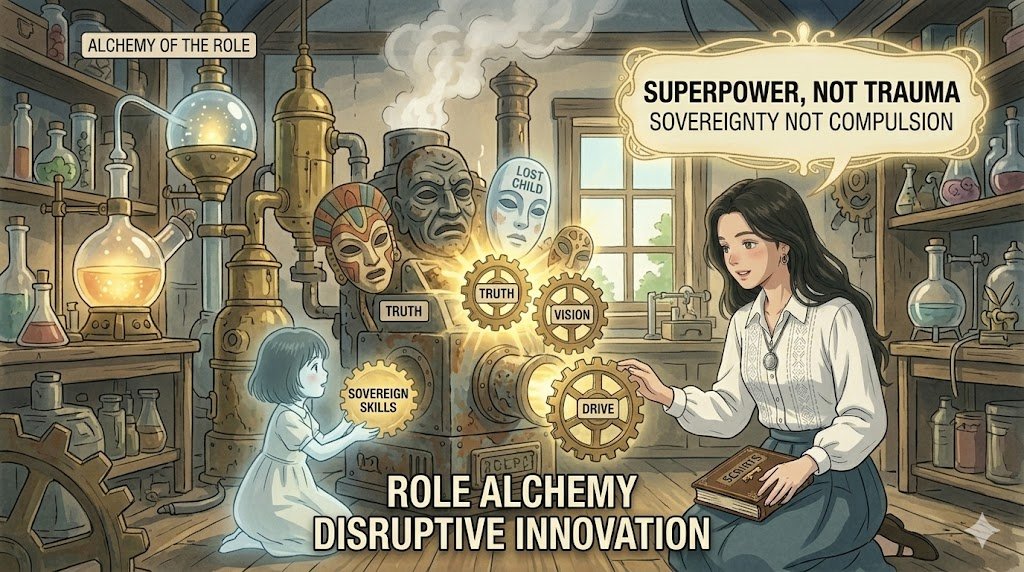
In many healing circles, the goal is to “kill” the family role. We disagree. That role saved your life. You don’t kill a lifesaver; you retire it and look at what it’s made of. Every internalized role contains a Core Competency that, when stripped of its childhood trauma, becomes your adult superpower.
This is the process of Role Alchemy:
- The Scapegoat’s Truth: In a dysfunctional family, the Scapegoat is punished for seeing the truth. In the healthy adult world, this becomes Disruptive Innovation. You have the ability to see through “corporate speak” and identify systemic rot. Once you stop feeling like “the problem,” you become the “Solution-Seeker.”
- The Hero’s Drive: When you stop performing for external validation, that “Hero” energy turns into Purposeful Leadership. You transition from “doing everything for everyone” to “doing the right things for the right reasons.”
- The Lost Child’s Peace: Once you stop hiding out of fear, your ability to be alone and observe becomes Strategic Vision. You can see the whole board because you aren’t stuck in the middle of the emotional fray.
The goal isn’t to become a “new person.” It’s to reclaim the skills you learned in the trenches of your childhood and use them with sovereignty rather than compulsion. You do it because you can, not because you must.
The Practice Bridge: Mapping the Ghost
Logic is a great start, but it’s a terrible finish. You can read every word of this article and still wake up tomorrow morning feeling that familiar, heavy pressure in your chest to over-perform or disappear. Why? Because these roles are written in the body and the subconscious narrative, not just the logical mind.
To break the script, you have to see the script. You have to look at the timeline of your life and see where the “Hero” took the wheel and where the “Lost Child” went into hiding. You need to see the patterns of internalized family dynamics roles in adults as they actually played out in your real-world choices—your exes, your career pivots, and your health.
The next step isn’t more reading. It’s “The Work.”
We’ve designed a specific practice to help you externalize these internal ghosts. It’s time to move from theory to cartography. You are going to map your life, not by the events that happened to you, but by the roles you played to survive them.
[GO TO DAY 4 ASSIGNMENT: How to Create a Narrative Life Map for Self-Discovery]
Click the link above to access the full step-by-step guide and the Narrative Map Workbook to start rewriting your story today.
The Next Chapter: From Diagnosis to Cartography
Congratulations. You’ve just performed an emotional autopsy on your own life. You’ve identified the mask, the survival mechanism, and the “why” behind your 3:00 AM anxiety. But here is the hard truth that most self-help influencers won’t tell you: Intellectualizing your trauma is not the same as healing it.
You can know, with 100% clinical certainty, that you are an over-functioning “Hero” because your father was an alcoholic. You can cite the LSI keywords of your own pain. But if you still can’t say “no” to your boss on Friday afternoon, your knowledge is just a fancy new way to decorate your cage.
The reason internalized family dynamics roles in adults are so hard to shake is that they aren’t just thoughts—they are a physical “Default Mode Network” in your brain. To change the role, you have to change the narrative. You have to move the story from your subconscious “gut” and get it onto paper where you can look it in the eye.
This is why we don’t stop at identification. We move to Narrative Mapping.
In the next step of this 60-day syllabus, we aren’t just going to talk about your roles; we are going to draw them. We’re going to look at the “Narrative Life Map”—a visual representation of your life’s timeline that reveals exactly where the “Ghost” took over. You’re going to see the intersections where you could have turned left (toward yourself) but instead turned right (toward the role).
Without a map, you’re just a person lost in the woods who happens to know the names of all the trees. It’s time to find the clearing.
You know the character you’ve been playing, but do you know where the script actually started—and where it’s secretly leading you next?
Linkings
- About Us: [What is Humanity Deboism? The Vision, The Mission and The Philosophy]
- 3 Months: [Build the Best Version of Yourself and Break the Autopilot]
- Gumroad: [Resources for 3 Months]
- Sequence of 3 Months (Previous): [Day 2: Healing Childhood Trauma: How to Regulate Your Limbic System]
- Sequence of 3 Months (Next): [Day 4: Are You Still Playing Your Family Role? (Scapegoat/Hero/Lost)] (Coming Next Week)
FAQ: Internalized Family Dynamics Roles in Adults
1. Can I play more than one family role?
Absolutely. Many people are “The Hero” in their professional lives but slip into “The Lost Child” or “The Scapegoat” when they walk through their parents’ front door. This is called Role Fluidity and usually depends on who is holding the most power in the room.
2. Is “The Golden Child” the same as “The Hero”?
Not quite. The Hero is self-driven to save the family; the Golden Child is a projection of a parent’s ego. Both roles result in a lack of authentic self, but the Hero often suffers more from burnout, while the Golden Child struggles with extreme fragile narcissism or “impostor syndrome.”
3. How do these roles affect my romantic relationships?
We tend to “marry our unfinished business.” A Scapegoat might marry someone they can “fix” to prove they aren’t the bad one, while a Lost Child might marry a dominant Hero so they can continue to remain invisible and avoid making decisions.
4. Can I change my role without cutting off my family?
Yes, but it requires “Emotional Detachment.” You have to stop reacting to their “hooks.” When you stop playing your part, the family will try to “re-cast” you. If you stay consistent in your new, authentic self, the system eventually has to adjust—or find a new Scapegoat.
5. Why do I feel guilty when I stop being “The Hero”?
Because the Hero’s identity is built on being needed. When you stop over-functioning, you feel “useless.” That guilt is actually a sign of progress—it’s the “withdrawal symptoms” of leaving your survival role.
6. Do these roles exist in healthy families?
Healthy families have functions, not roles. In a healthy system, a child can be “the achiever” one day and “the one who needs help” the next. Roles become “internalized” and toxic when they are rigid and mandatory for the family’s survival.
7. Is the “Lost Child” role common in middle children?
Statistically, yes. Birth order often influences which “survival vest” is available. If the oldest is the Hero and the second is the Scapegoat, the third often finds safety in being the “Lost Child” to avoid the crossfire.
8. Can these roles be passed down to my own children?
Yes. If you haven’t processed your role as a Scapegoat, you might unconsciously “Heroize” your child to compensate, or treat them as a Scapegoat for your own unresolved shame. Healing yourself is the only way to break the generational chain.
The Humanity Deboism Source Code (References)
- Bowen, M. (1978). Family Therapy in Clinical Practice. The foundational text for Family Systems Theory. This is where the concept of “differentiation of self” originates—the ability to be yourself while still being connected to your tribe.
- Wegscheider-Cruse, S. (1981). Another Chance: Hope and Health for the Alcoholic Family. The primary source for the specific roles of Hero, Scapegoat, Lost Child, and Mascot. While originally written for families dealing with addiction, these archetypes apply to any high-stress family system.
- Van der Kolk, B. (2014). The Body Keeps the Score: Brain, Mind, and Body in the Healing of Trauma. Essential for understanding how these roles aren’t just “ideas” but are physically wired into our nervous systems and muscle memory.
- Maté, G. (2022). The Myth of Normal: Trauma, Illness, and Healing in a Toxic Culture. A masterpiece on how we sacrifice our “Authenticity” (who we really are) in favor of “Attachment” (the role we play to keep our parents close).
- Lerner, H. (1985). The Dance of Anger: A Woman’s Guide to Changing the Patterns of Intimate Relationships. A brilliant look at how family “triangles” work and how to stop playing your assigned part without burning the whole house down.
- Schwartz, R. C. (2021). No Bad Parts: Healing Trauma and Restoring Wholeness with the Internal Family Systems Model. The definitive guide to understanding that you are a “multiplicity” of parts, many of which are still stuck in the roles they took on at age six.
Disclaimer: While we lean heavily into clinical research to ensure “EEAT” (Experience, Expertise, Authoritativeness, and Trust), this article is for educational purposes and is not a replacement for professional medical advice or psychiatric treatment.

Comments
No comments yet. Be the first to share your thoughts.
Post a Comment